There is a strength in softness that we often overlook. We are taught to begin boldly, to push hard, to prove ourselves worthy of whatever comes next. But sometimes the bravest thing you can do is begin quietly, without force, like a seed breaking open underground.
Soft beginnings honor your limits. They make room for your humanity. They remind you that growth does not need to be loud to be meaningful. You don’t have to transform all at once. You don’t have to become everything you hope to be in a single breath. Let this beginning be gentle. Let it rise slowly, like early morning light stretching across the floor.
If you are tired, start softly. If you are afraid, start softly. If you are hopeful but unsure, start softly.
Courage does not always roar. Often, it whispers: try again, but gently this time.
This week, notice where softness might lead you farther than pressure ever could. Notice what unfolds when you allow yourself to be guided rather than pushed.
May your beginnings be tender. May your courage be quiet but steady. And may you find comfort in the pace that feels true to you.
There is a quiet relief in realizing you don’t need a perfect beginning. You don’t have to wait for clarity, motivation, or some imagined version of yourself to arrive. You can start exactly where you are—here, in this moment, with whatever strength or softness you bring.
We spend so much time believing we must improve ourselves before we can move forward. But the truth is simpler, kinder: life unfolds from the place you already stand. You are allowed to take small steps, hesitant steps, unfinished steps. Each one counts.
Maybe you’re carrying more than you let others see. Maybe you feel behind, or overwhelmed, or unsure. Even so, you are allowed to begin gently. You are allowed to let this moment be enough. Starting where you are does not mean lowering your hope. It means honoring your humanity. It means trusting that growth does not need to be dramatic to be real.
This week, I hope you give yourself permission to begin something—anything—not because you feel ready, but because your heart is whispering that it’s time. May you feel held by grace, rather than pressure. May you remember that beginnings never ask perfection, only presence. And may you trust that this path, starting here, will lead exactly where you need to go.
There is a quiet kind of courage in beginning. Today, I want to invite you to something simple and sacred: the act of coming home to yourself. So much of life pulls us outward. We learn to measure our worth by productivity, to move quickly past our feelings, to believe rest must be earned and joy must be justified. Without realizing it, we drift away from our breath, our bodies, our truest needs. And yet, home has never left us. It has been waiting patiently, just beneath the noise.
Coming home does not require grand gestures. It begins in the smallest moments: a deep breath taken without apology, a pause before saying yes, the soft recognition of how tired you really are. It is choosing honesty over performance. It is allowing yourself to arrive as you are—unfinished, tender, and still worthy of care.
If this week feels heavy, let that be okay. If it feels quiet, let that be enough. There is no expectation here except presence. You are not behind. You are not broken. You are simply human, learning again how to listen to your own heart. And as this week unfolds, I hope you find one moment to sit with yourself without judgment. Maybe it’s in the early morning light, or at the end of a long day. Place a hand over your heart and remember: you belong to yourself first.
May this week meet you kindly. May you rest where you can. And may coming home feel like relief, not responsibility.
There is a quiet kind of courage in choosing solitude—a courage the world rarely teaches us to celebrate. We are taught to fill every pause with sound, every space with company, every quiet moment with scrolling and distraction. But solitude is not emptiness. It is not the absence of love, nor the evidence of loneliness. Solitude is presence—your own.
To sit alone with your thoughts requires a bravery both ancient and intimate. Only those who master it discover the hidden map of their inner world: the soft corners where old dreams sleep, the wounded places that still ache, the unspoken truths waiting to rise like dawn. Solitude asks you to turn inward, to listen, to sift through the noise of life until you hear your own heartbeat again.
Most people run from that moment not because they lack strength, but because silence magnifies everything—desires, fears, regrets, and the parts of ourselves we tuck out of sight. Yet it’s in that very amplification that transformation begins. When we choose solitude willingly, we return to a self we have long forgotten.
Solitude is where the soul breathes. It is where creativity lifts its head, where intuition sharpens, and the world’s demands fall away long enough for us to feel our own. It is the meadow at dusk, the quiet kitchen before sunrise, or the journal page waiting for ink. In solitude, we stop performing. We become who we were always meant to be.
Those who master solitude are not detached from the world; they are anchored within themselves. They know how to enjoy company without losing their own voice in it. They can love deeply without clinging, give freely without depletion, and walk boldly because they know where their path begins—beneath their own feet.
So, if solitude has been calling you, honor that call. It is not a sign of withdrawal. It is an invitation. A return. A remembering.
There is a kind of love that does not arrive with thunder or grand gestures. It does not demand to be seen. It simply is quiet, steadfast, and radiant in its simplicity. It is the love that finds you when you are not performing, when your hair is uncombed, your thoughts a little tangled, and your heart unsure of its worth. It looks at you and does not flinch. It does not ask you to be brighter, softer, thinner, louder, or more like someone else. It simply says, “You are enough.”
We spend so much of life learning how to earn affection and shrinking to fit inside someone’s idea of beautiful. But the truest kind of love has no checklist, no conditional clauses. It does not wait for you to change. It begins with who you are now, and it whispers: stay.
There is quiet beauty in that. The beauty of being loved not for what you could become, but for what already blooms within you.
The love that sees you—truly sees you—does not shout. It hums softly in the background, like a melody you almost forgot. It is in the way someone remembers the story you told months ago, or how they know your silence isn’t disinterest, but reflection. It is the warmth of being held without being fixed. The ease of being known without needing to explain. It is the moment when someone looks at you and they see you. And you realize, perhaps for the first time, that you don’t have to be extraordinary to be loved. You only have to be real.
In the stories I write, I often return to this theme—the quiet kind of love that doesn’t need to announce itself. The love that happens between the words. It’s in the way one character traces the freckles on another’s arm, as if reading constellations. It’s in the pause before a confession, the held breath that carries more truth than a thousand declarations. It’s in the way they say nothing—and yet, everything is understood.
Romance, at its heart, is not always about passion that sets the sky on fire. Sometimes it’s the gentle warmth that lingers long after the sun has set. To be loved for who you are is a rare gift. It is someone saying, “I see your shadows, and I am not afraid.” It is love that does not try to rewrite your story but chooses to walk within it.
And perhaps that is the most profound kind of beauty—the quiet certainty that you can lay down your armor and still be cherished. That you can be imperfect, unguarded, and yet, somehow… still enough. Because love, when it is true, is not loud. It is patient. It is kind. It does not decorate you—it reveals you.
When the world grows loud again, remember this: You do not need to earn the right to be loved. You only need to be willing to be seen. There is quiet beauty in being loved for who you are and even greater beauty in learning to love yourself the same way.
To be a woman today is to live between contradictions where expectations are heavy, yet dreams remain defiantly light. We are told to be everything at once: strong but gentle, ambitious but modest, self-sufficient yet nurturing. We are taught to rise—quietly, gracefully—while balancing the world on our shoulders.
From the moment we open our eyes each morning, the invisible choreography begins. We work, we care, we plan, we mend. We measure ourselves against impossible mirrors—society’s standards, our family’s hopes, our own hearts’ whispers. Yet behind every polished smile is a woman who fights daily battles no one sees: the fatigue that comes from trying to be “enough,” the small heartbreaks of being misunderstood, the silent rebuilding after every storm.
Still, we dream. We dream of a world that sees us for who we are, not what we’re expected to be. We dream of building careers that fulfill us and homes that comfort us without having to sacrifice one for the other. We dream of walking through life unapologetically, our worth not defined by roles or titles but by the quiet fire in our souls.
The truth is that womanhood today is both an evolution and a revolution. It’s the courage to speak when silence is safer. It’s choosing rest when the world demands productivity. It’s daring to love ourselves fully, even when the world profits from our insecurities.
Every woman carries her own story—a mosaic of efforts and small victories. We may stumble beneath the weight of expectation, but we rise, again and again, because we are not made of fragility. We are made of endurance, empathy, and a fierce, unrelenting hope. And in that daily fight—to make it, to matter, to dream—we are rewriting what it means to be a woman in this world.
The other day, I contemplated on how the world we live in is filled with texts, emojis, and video calls, and the art of writing letters seems like a relic of the past. Yet, across centuries and cultures, letters have served as one of humanity’s most powerful ways to connect, inspire, and remember.
Long before the tap of a keyboard, messages traveled the world in ink and parchment. As far back as 500 BCE, Persians, Romans, and Egyptians sent messages written on papyrus scrolls. These weren’t casual updates but were part of trade records, politics, and personal affairs. During the medieval era, monks illuminated manuscripts with gold leaf and careful calligraphy, turning letters into works of art. Royal courts exchanged diplomatic missives that could start or stop wars. During the age of exploration, letters became lifelines across the oceans. Sailors wrote home from distant ports, their words carrying tales of adventure and longing to families who might not see them for years. During the Victorian era of the 19th century came the infamous love letters, a genre of writing that was intermingled with devotion and a whole lot of hope.
While today’s communication is faster, something is often lost in the rush. A letter slows us down and invites reflection. When you write by hand, every word is chosen with more care, every sentence shaped for the reader in mind.
Letters can be keepsakes because a text can be deleted in a swipe, but a letter can be folded, tucked into a drawer, and rediscovered years later. They are time capsules because they capture not only words but also the emotion and handwriting of a moment in time. In an age where attention is scattered, a letter says, “You mattered enough for me to stop, sit, and write to you.”
Writing a letter can be transformative. For the recipient, receiving a letter in the mail is like opening a gift; it’s tactile, personal, and full of human warmth. So, pick your favorite tools, be it a simple notebook, a fountain pen, or a piece of cute stationery. Write to share memories, ask questions, and let your personality shine. Don’t worry about perfection. The real beauty is in the authenticity, not in flawless grammar. Send it, even if it feels small. A short note can have a bigger impact than you think.
Letters are bridges between hearts, woven in ink. In an era where most messages vanish in seconds, a handwritten letter can become a lasting treasure. The art of letter writing isn’t lost—it’s simply waiting for us to pick up a pen and let it live again.
Have you ever walked away from a conversation replaying every word in your head—wishing you had said less, or perhaps, said something more kind? Words have a curious power. They can build bridges or burn them down. They can heal wounds or inflict them. And while we may forget what was said to us a month ago, we rarely forget how it made us feel.
In today’s fast-paced world, we’re constantly navigating stressful situations: deadlines, misunderstandings, personal frustrations. The urge to react quickly—often harshly—is a natural one. But it’s in these moments, when emotions run high and storms rise within us, that our words hold the most weight.
Words are not just sounds carried on breath—they are seeds. Once spoken, they take root in the minds of others. A kind word can linger like a melody, inspiring confidence or offering comfort. But harsh or careless words? They echo like thunder, often long after the conversation ends.
It only takes one sentence to change someone’s entire day. A sincere compliment can light up a weary soul. A cruel comment, even tossed off in passing, can undo years of healing.
That’s why it’s so important to choose our words with care, especially in tense or emotional situations. When we speak from anger, fear, or hurt, we often speak in ways we don’t mean. And though we can apologize, we can’t unsay what was said.
Remaining calm during conflict isn’t weakness—it’s wisdom. Calmness gives us clarity. It gives us space between stimulus and response. In that space, we can choose our words intentionally instead of reacting impulsively.
Imagine you’re in the middle of an argument. Your pulse is racing. Your mind is firing off everything you want to say. But then—what if you paused? What if you took a breath, and reminded yourself that this moment will pass, but your words may not?
Staying calm in stormy waters doesn’t mean ignoring problems. It means approaching them with steadiness. Like a lighthouse in the storm, calm words guide us toward resolution instead of wreckage.
Here are a few gentle reminders to help guide our words, especially when the emotional tide is high:
Pause before you respond. Even a few seconds of silence can save you from saying something you’ll regret. Ask yourself: “Is it true? Is it necessary? Is it kind?” This old proverb still holds incredible wisdom. Speak to understand, not just to be heard. The goal in conflict is connection, not conquest. Remember that tone matters. How you say something often matters more than what you say. Practice the art of the graceful exit. Sometimes, walking away to cool down is the wisest thing you can say.
In every conversation, we leave an imprint. Our words shape our relationships, our reputation, and our legacy. The power of speech is a gift, and like all gifts, it comes with responsibility.
So let’s be the people who speak life. Who pause when tempted to lash out. Who, even in the middle of the storm, choose gentleness over judgment.
Because at the end of the day, we won’t be remembered for every witty comeback or perfect argument—but we will be remembered for how we made others feel.
In a world flooded with pings, previews, and instant replies, we’ve never communicated more—and yet, rarely do we connect. We abbreviate emotions into emojis, reduce stories to 10-second clips, and measure relationships in likes and read receipts. But deep down, something in us longs for more than the quick tap of a thumbs-up. We crave something lasting, something true.
That something is the written word.
Reading—whether a letter, a novel, or even a well-crafted passage—invites us to slow down, to linger. It’s not just about absorbing information but about experiencing a world. Unlike text messages, which are designed for speed, written stories ask us to pause, breathe, and reflect. They open doors to inner landscapes, where thoughts echo, hearts stir, and time bends.
In stories, we meet characters who bleed with honesty. We explore wildflower meadows under silver moons, stand at the edge of ancient forests, or travel through memories too fragile to speak aloud. Through each word, we remember who we are—not the curated version but the soul beneath the surface. That’s the power of the written word: it roots us, uplifts us, and gives voice to what we’re often too busy to say.
In reading, we rise above the noise. We enter a sacred conversation between writer and reader, where empathy grows, imagination soars, and healing begins.
At my Amazon page, I believe in bringing that magic back—one whisper and one story at a time. This isn’t about nostalgia. It’s about revival and choosing depth. So, the next time your spirit feels tired or tangled, don’t reach for your phone. Reach for a page. Let it remind you that you are more than just a status update.
For those who feel too deeply in a world that moves too fast
Have you ever met someone who seems like they’ve been here before?
They speak with certainty, not because they know everything, but because they know what matters. They move through the world with an ancient stillness, as though their soul carries the dust of many lifetimes and the echo of centuries-old songs.
These are the old souls.
They are the listeners in a room full of noise. The ones who feel at home in silence. The ones who pause to watch a leaf fall. They feel the shift of seasons in their bones and mourn what others haven’t noticed was lost.
Old souls are often misunderstood. They may be called overly sensitive, distant, or “too intense.” They are tuned in to something deeper, quieter, and enduring.
Old souls find beauty in the ordinary: a cup of tea, the smell of old books, or the flicker of candlelight on a quiet evening. They crave meaning, not momentum.Fast success, small talk, and superficial connections don’t feed them. They long for depth. Feel connected to time in unusual ways.Old buildings move them. History feels familiar. They are drawn to things “with a story.” They often feel older than their years. Even as children, they felt like the world was too loud and hurried. They weren’t lost but were waiting for the world to catch up. They are deeply empathetic. They feel what others feel, often without words. They mourn quietly and love endlessly.
Being old souls in a modern world can be lonely. The rush, noise, and distraction make them feel like they are walking against the wind. But within them is a strength that doesn’t waver.
Old souls are not here to outpace the world. They anchor it and remind others to slow down, see, feel, and remember what matters.
You don’t have to do anything extraordinary to fulfill your purpose. Your presence is the offering. Your calm is the cure. Your wisdom is a well; others may not even know they’re thirsty for it until they meet an old soul.
So, to the old soul reading this: You are not behind. You are not too slow. You are not out of place.
You are precisely what this world needs. Stay rooted. Stay gentle.


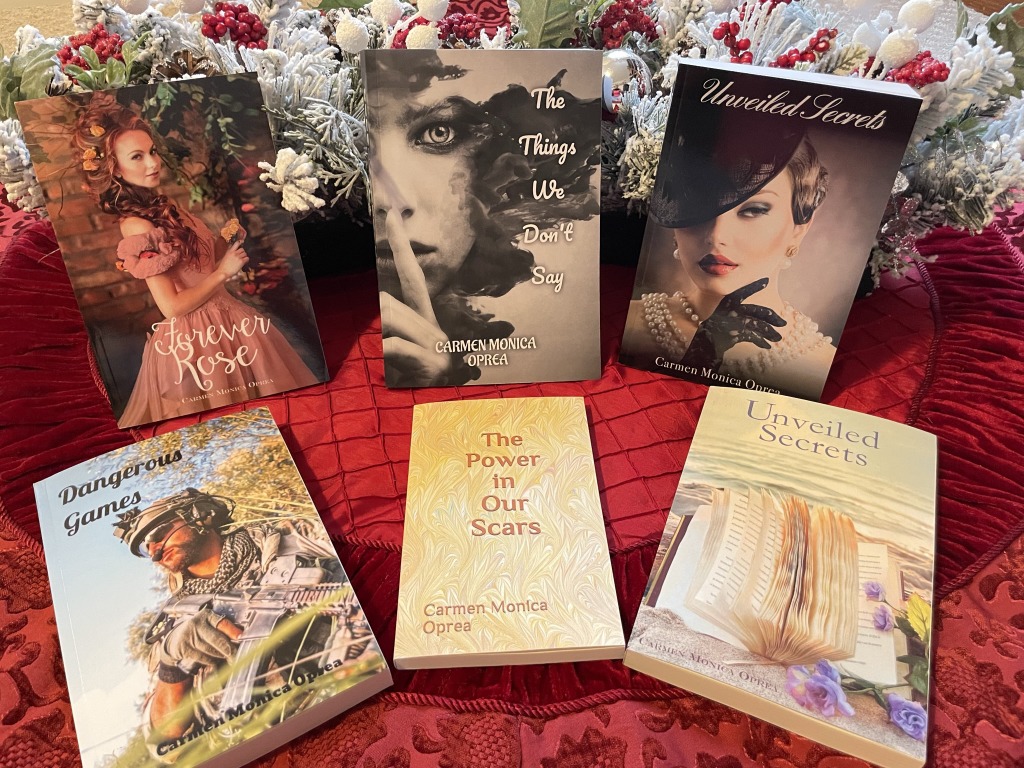


 Carmen Monica Oprea